ADU Impact Fees in California: The 750-Square-Foot Line and What Cities Can Charge
California bars impact fees on ADUs with 750 sq ft or less of interior livable space and limits them above that. How proportional fees scale, what school and utility fees apply, and how to budget.
Fees Are a Design Decision
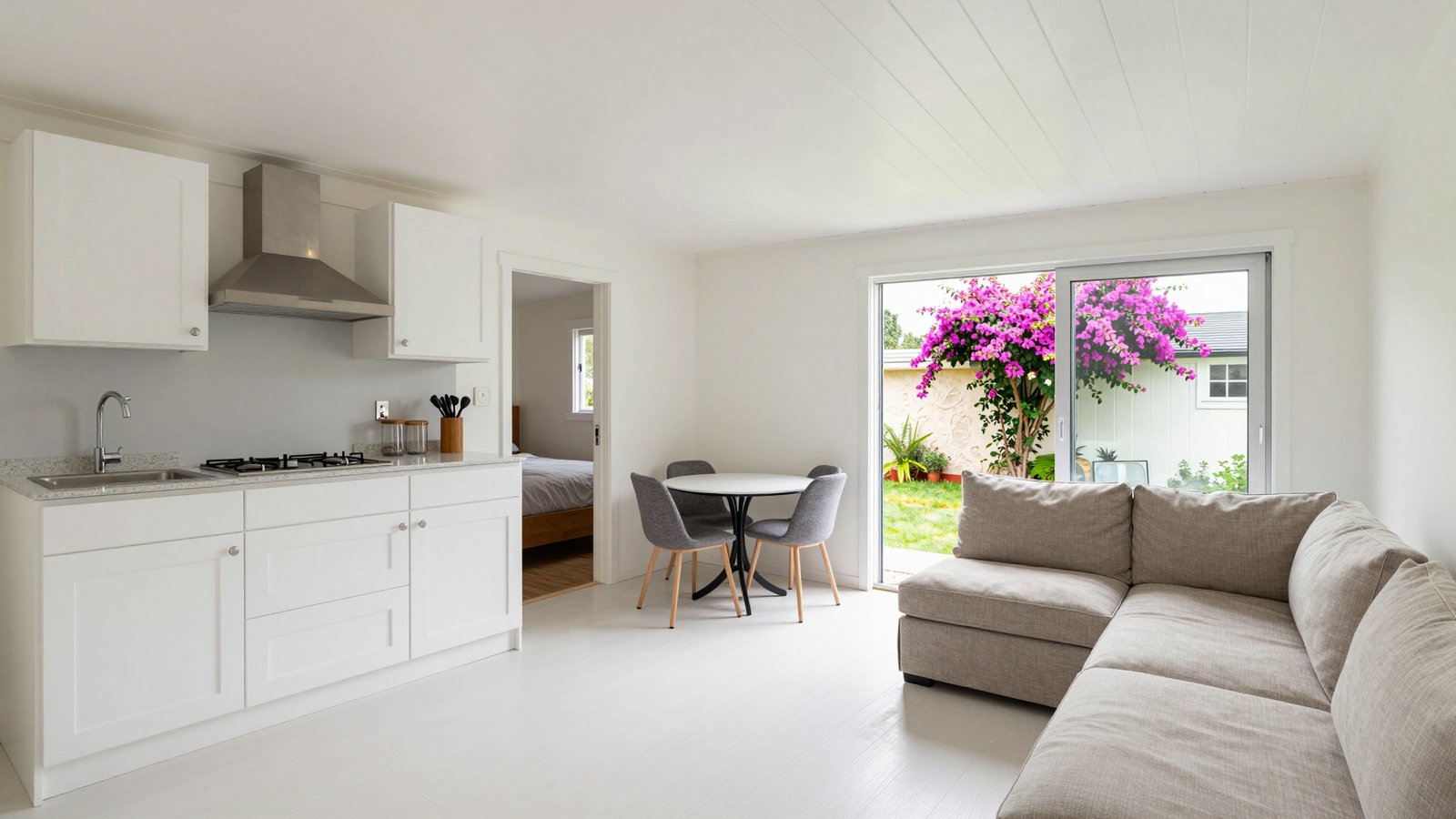
Many ADU budgets treat government fees as a single guess. In California, the size of your ADU, how it's built, and how it connects to utilities determine which fees apply at all. A few dozen square feet can separate zero impact fees from a five-figure bill.
State law limits what cities, counties, special districts, and water corporations can charge. Those limits changed on January 1, 2026. SB 1117, signed September 29, 2026, takes effect January 1, 2027.
Where the Law Lives Now
SB 477 (Chapter 7, Statutes of 2024) moved California's ADU statutes into their own chapter of the Government Code, Sections 66310–66342, effective March 25, 2024. SB 543 (Chapter 520, Statutes of 2025) then renumbered the fee rules: former Section 66324 is now Government Code Section 66311.5, effective January 1, 2026. Local handouts citing Section 65852.2(f) or 66324 describe older versions.
SB 543 also tied the fee thresholds to interior livable space. Section 66313(e) defines livable space as space intended for human habitation, including living, sleeping, eating, cooking, or sanitation. HCD's ADU Handbook says that includes bedrooms, bathrooms, kitchens, laundry rooms, closets, and interior stairs.
The 750-Square-Foot Rule
Under Section 66311.5(c)(1), a local agency, special district, or water corporation cannot impose any impact fee on:
- An ADU with 750 square feet of interior livable space or less
- A junior ADU (JADU) with 500 square feet of interior livable space or less. Section 66313(d) caps JADUs at that size, so a unit that meets the JADU definition owes no impact fees.
Above 750 square feet, impact fees are allowed, but they must be charged proportionately in relation to the square footage of the primary dwelling.
"Impact fee" means a fee under the Mitigation Fee Act (Section 66000(b)) that funds public facilities related to a project, such as park or traffic fees, and it expressly includes Quimby park fees (Section 66477). Two common charges fall outside it:
- Permit and plan check fees: Fees for processing applications are excluded from the definition, so the 750 sq ft exemption doesn't reach them.
- Utility connection fees and capacity charges: These follow separate rules, covered below.
Worked Example: How Proportional Fees Scale
HCD's ADU Handbook illustrates proportionality this way: a 1,000 sq ft ADU with a 2,000 sq ft primary home could be charged 50 percent of the impact fees a new primary dwelling would pay on the same site.
Now take a hypothetical city whose impact fees for a new single-family home total $24,000, and a lot with a 1,600 sq ft primary home:
- 750 sq ft ADU: Exempt, $0
- 800 sq ft ADU: 800 ÷ 1,600 = 50%, or $12,000
- 1,000 sq ft ADU: 1,000 ÷ 1,600 = 62.5%, or $15,000
- 1,200 sq ft ADU: 1,200 ÷ 1,600 = 75%, or $18,000
The threshold is a cliff, not a ramp. HCD's example applies the ratio to the ADU's full square footage, so here the extra 50 square feet cost $12,000. The ratio also depends on the primary home: the same 1,000 sq ft ADU behind a 2,500 sq ft house would be assessed at 40 percent, not 62.5 percent.
SB 1117 Is Signed: Effective January 1, 2027
Governor Newsom signed Senate Bill 1117 (Cervantes, Chapter 809, Statutes of 2026) on September 29, 2026. It is a regular, non-urgency bill, so it takes effect January 1, 2027. For up to two ADUs on a lot, impact fees on a unit over 750 square feet of interior livable space apply only to the area above that line. Applied to only the extra 50 square feet, the 800 sq ft example drops from $12,000 to about $750. SB 1117 Explained covers the new formula, who it applies to, and what it leaves unchanged.
School Fees Follow Their Own Threshold
School districts levy developer fees under Education Code Section 17620. Section 66311.5(c)(3) places an ADU or JADU with less than 500 square feet of interior livable space below that statute's 500-square-foot threshold, so it isn't subject to school fees. HCD's handbook says districts may, but are not required to, charge school fees on ADUs larger than 500 square feet.
The State Allocation Board's January 2026 adjustment set the maximum Level I residential rate at $5.38 per square foot. At that rate, an 800 sq ft ADU could owe about $4,300. Districts that qualify for Level II or Level III fees can charge more.
Water and Sewer: Connection Fees and Capacity Charges
These charges sit outside the 750 sq ft exemption, but Section 66311.5 limits them separately:
- Not a new residential use: An ADU or JADU cannot be treated as a new residential use when calculating connection fees or capacity charges unless it is built with a new single-family home.
- Units inside a home or existing structure: Section 66323(a)(1) covers an ADU or JADU within the existing or proposed space of a single-family home, or within an existing accessory structure. For these units, the agency cannot require a new or separate utility connection or charge a related fee, unless the unit is built with a new single-family home or the ADU is conveyed separately under Section 66342.
- Detached and other ADUs: For any other ADU, the agency may require a separate connection. Any fee must be proportionate to the ADU's burden on the water or sewer system, based on its square footage or its drainage fixture unit (DFU) values under the Uniform Plumbing Code, and cannot exceed the reasonable cost of service.
These limits cover water and sewer. HCD has no authority over gas and electric service; complaints about privately owned utilities such as PG&E go to the California Public Utilities Commission, and publicly owned utilities such as SMUD handle their own.
How to Budget for Fees
- Design to the line: Near 750 square feet? Price both sides, and ask the building department how it measures interior livable space before plans are final.
- Get an itemized estimate early: For each fee, ask which agency charges it and how. Water and sewer providers are often special districts, not the city; ask whether they require a separate connection and whether capacity charges use square footage or DFUs.
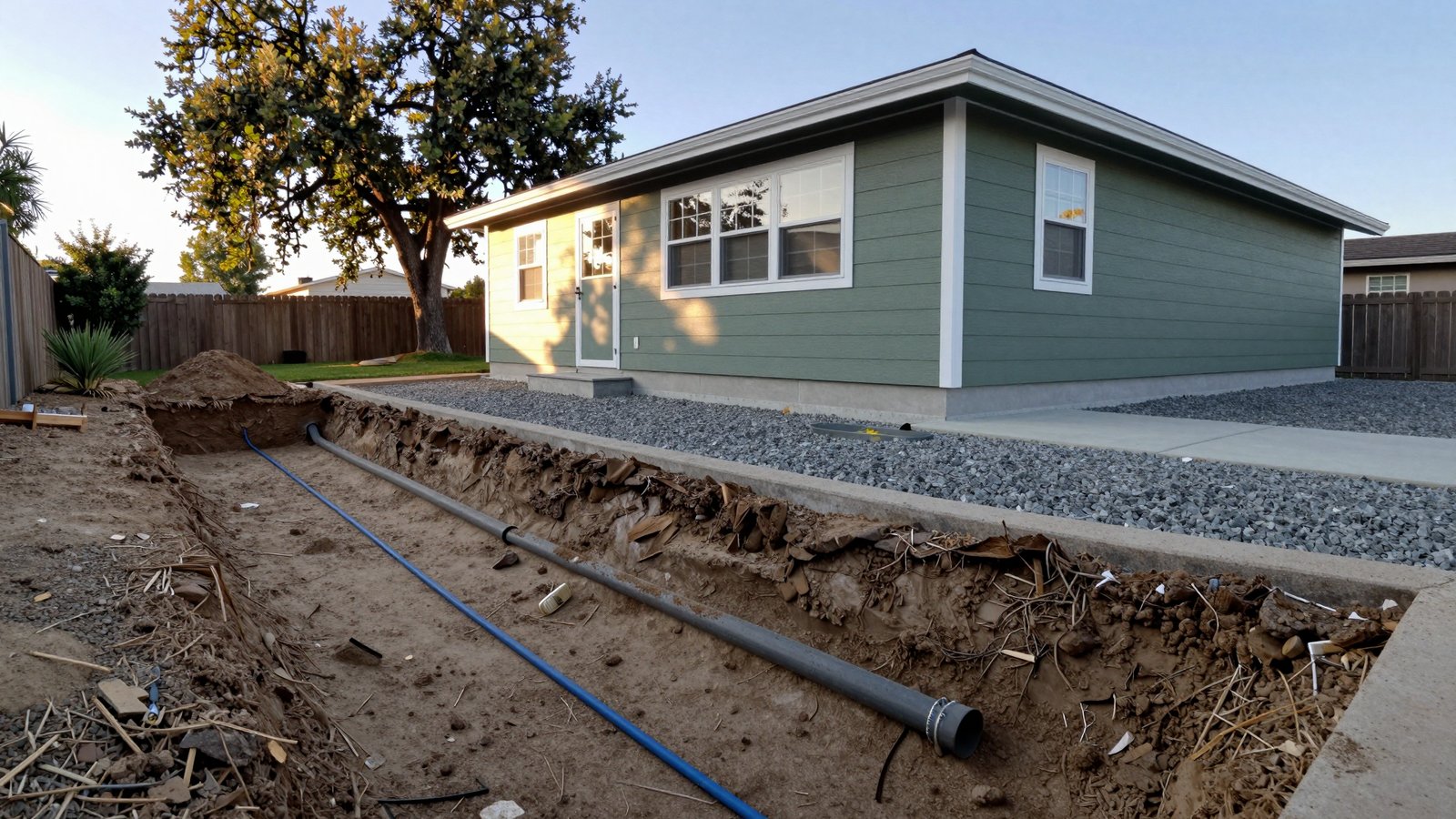
- Budget the physical work separately: The state limits govern fees, not trenching, meters, sewer laterals, or electrical upgrades.
- Question fees that don't match state law: HCD can enforce state ADU law and offers technical assistance through its ADU portal once an application has been submitted.
Bottom Line
For most California ADUs, the fee math turns on three numbers: 750 square feet for impact fees, 500 for school fees, and the size of your primary home. Settle them during design and fees become a budget line, not a surprise at permit issuance.
Planning an ADU and want to know which fees apply to your lot? Contact nanohouz for a site assessment.
Sources
- California Government Code § 66311.5 (formerly § 66324), as renumbered by SB 543, effective January 1, 2026
- California Government Code § 66313 (ADU definitions)
- California Government Code § 66323
- California Government Code § 66000 (Mitigation Fee Act definitions)
- California Education Code § 17620
- California Department of Housing and Community Development, Accessory Dwelling Unit Handbook (March 2026)
- SB 1117 (Cervantes, Chapter 809, Statutes of 2026), signed September 29, 2026, effective January 1, 2027
- California Constitution, Article IV, Section 10
- State Allocation Board, Index Adjustment on the Assessment for Development (January 28, 2026)
This article is general information, not legal advice. Fee rules change, and local fee schedules vary by city, county, and district; confirm current requirements with your local agencies. Current as of October 16, 2026.
Keep reading
Renting Your ADU or JADU in California: Owner-Occupancy Rules and the 30-Day Minimum
California bars owner-occupancy rules for ADUs, and since 2026 only JADUs that share a bathroom require the owner on site. Here's how the 30-day rental minimum shapes short-term rental plans.
The ADU Permit Shot Clock: How California's 60-Day Deadline Works
California law gives permitting agencies 15 business days to rule an ADU application complete and 60 days to approve or deny it. Miss the 60-day deadline and it is deemed approved. Here's how the clock works.
Manufactured ADU Costs in California: What the Starting Price Covers
Every nanohouz floor plan now shows a starting price. Here's what it covers, what our turnkey scope includes, and the lot-specific fees, site work and utility costs that move a California ADU's final number.