SB 9 Explained: How California's Duplex Law Opens the Door to More ADUs
Senate Bill 9 allows most single-family homeowners in California to split their lot or add a duplex — but the interaction with ADU law creates opportunities few people know about.
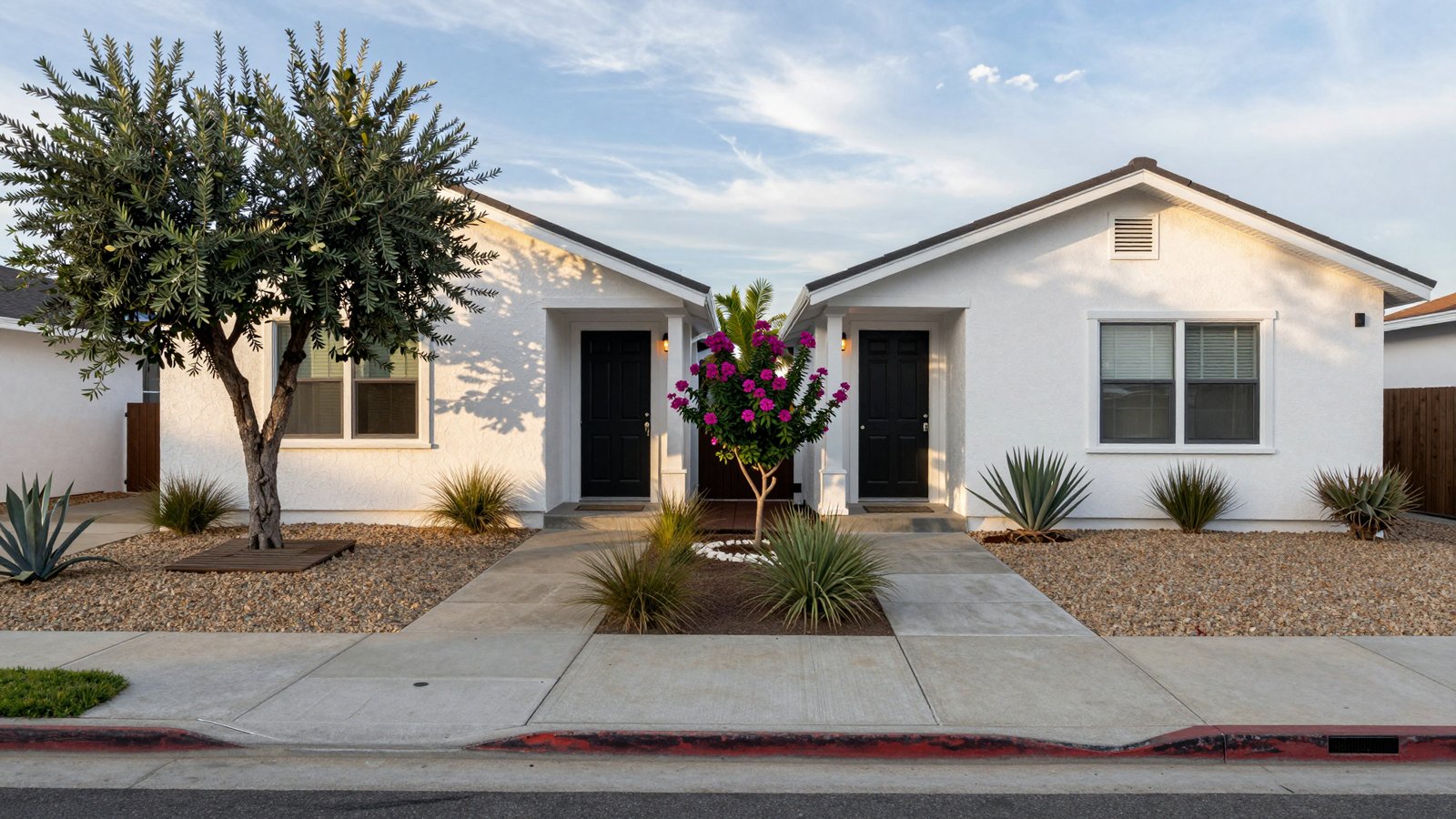
What Is SB 9?
Senate Bill 9, signed into law in September 2021 and effective January 1, 2022, is one of the most significant housing reforms in California history. It requires most California cities and counties to ministerially approve (i.e., approve without discretionary review) applications to:
- Build a duplex on a single-family lot
- Split a single-family lot into two parcels
- Do both — split the lot AND build duplexes on each new parcel
"Ministerially approve" means the local government cannot use design review, neighborhood opposition, or subjective criteria to block a project. If your application meets the objective zoning standards, it gets approved.
How SB 9 and ADU Law Work Together
Here's where it gets powerful. ADU law (AB 2221, AB 68, and related bills) already allows most single-family homeowners to add:
- One attached or detached ADU
- One Junior ADU (JADU) inside the primary residence
When you combine SB 9 with existing ADU law, a single lot that currently holds one home could potentially be converted into a property with four or more units:
- Split your lot into two parcels under SB 9
- Build a duplex on each parcel (two units each = four total)
- Add ADUs on each parcel as permitted by state ADU law
Not every lot qualifies, and local rules still apply within SB 9's guardrails — but for investors and homeowners in high-value California markets, this unlocks significant density that wasn't possible before.
Who Qualifies?
SB 9 applies to:
- Single-family residential zones
- Properties NOT in a historic district, fire hazard severity zone, earthquake fault zone, flood zone, or other protected area
- Properties NOT where the owner has exercised Ellis Act evictions within the last 15 years
- Lots at least 1,200 sq ft in size (for a lot split)
What Does This Mean for ADU Construction Costs?
Manufactured ADUs — like the ones nanohouz deploys — are particularly well-suited for SB 9 projects. Because they're built in a factory and delivered to the site, they can be placed on a newly split parcel faster and at lower cost than site-built construction. The predictable timeline also matters: under SB 9, permitting timelines are strictly limited by state law, so the entire development cycle can move quickly when you use manufactured housing.
Key Takeaway
SB 9 doesn't automatically apply to every lot, and executing on a lot split or duplex project still requires working through local building departments. But for California homeowners and investors, the combination of SB 9 and ADU law represents the most significant density opportunity in decades.
If you own a single-family property in California and want to understand what's possible on your specific lot, contact nanohouz for a free feasibility consultation.
Keep reading
ADU Condoization in California: Can You Sell Your ADU Separately?
AB 1033 allows cities to permit the separate sale of ADUs as condominiums. Here's what it means, which cities have opted in, and how it changes the math for ADU investors.
How to Actually Split Your Lot Under SB 9: A Step-by-Step Guide for California Homeowners
SB 9 gives California homeowners the legal right to split a single-family lot — but the path from "I want to do this" to a recorded parcel map is more involved than most people expect. Here's exactly what it takes.
Manufactured vs. Modular ADUs in California: What's the Difference?
The terms "manufactured," "modular," and "prefab" are used interchangeably but they mean very different things — especially under California law. Getting this right affects your permits, financing, and timeline.