How to Actually Split Your Lot Under SB 9: A Step-by-Step Guide for California Homeowners
SB 9 gives California homeowners the legal right to split a single-family lot — but the path from "I want to do this" to a recorded parcel map is more involved than most people expect. Here's exactly what it takes.
Why SB 9 Lot Splits Are Still Underused
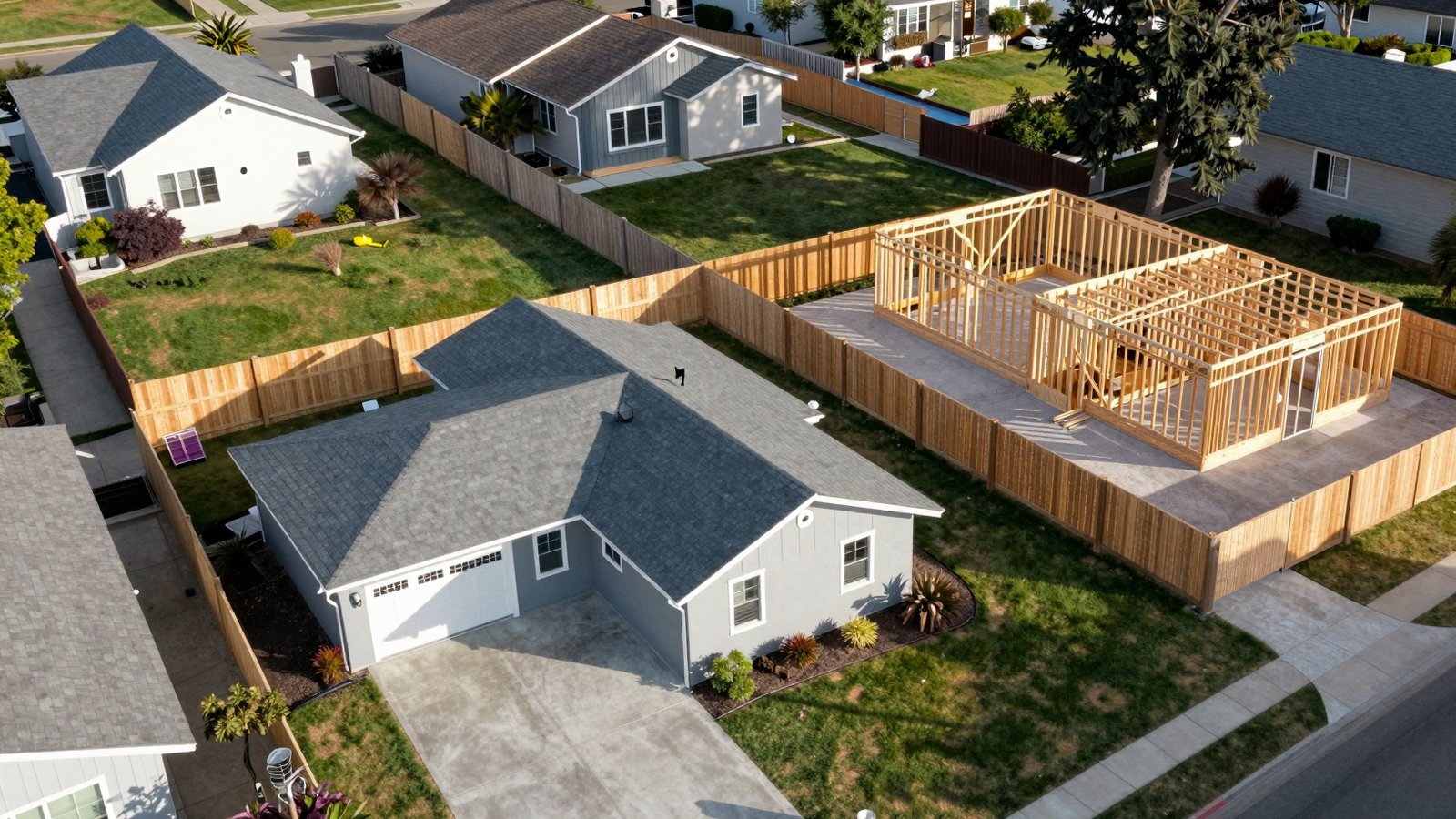
Since Senate Bill 9 took effect on January 1, 2022, California homeowners have had the legal right to split a single-family lot into two parcels and develop each one independently. On paper, this is a massive opportunity — potentially doubling or more the number of housing units on a lot that previously allowed only one.
In practice, the number of homeowners who have successfully completed SB 9 lot splits remains surprisingly low. The reason isn't just complexity — it's that the process involves multiple agencies, a specific sequence of steps, and local rules that vary significantly by city. Most homeowners don't know where to start, or they get partway through the process and stall.
This guide walks through exactly what an SB 9 lot split involves, from the initial feasibility check through the recorded parcel map.
Step 1: Confirm Your Lot Qualifies
Not every single-family lot in California is eligible for an SB 9 lot split. Before spending time or money on the process, confirm all of the following:
- Zoning: The property must be in a single-family residential zone. Lots zoned for multifamily use are not eligible for SB 9 (they have their own development rules).
- Lot size: The lot must be large enough to create two parcels of at least 1,200 square feet each after the split. Each resulting parcel must be at least 40% of the original lot area.
- Location exclusions: SB 9 does not apply to properties in a historic district, earthquake fault zone (Alquist-Priolo), 100-year flood zone, wetlands, farmland, habitat for protected species, or a very high fire hazard severity zone (VHFHSZ). This last exclusion is significant and eliminates a meaningful portion of California lots.
- Tenant protections: If a tenant has lived on the property within the last 3 years, a lot split is not permitted. If you've used the Ellis Act to evict tenants within the last 15 years, you're also ineligible.
- Owner-occupancy: For a lot split (but NOT for an SB 9 duplex without a split), the applicant must sign a declaration that they intend to occupy one of the resulting units as their primary residence for at least 3 years after the split is approved.
If your lot passes all of these tests, you're eligible to proceed.
Step 2: Hire a Licensed Surveyor
A lot split is a legal division of real property. You cannot do this without a licensed land surveyor. The surveyor will:
- Prepare a parcel map (also called a lot split map or urban lot split map under SB 9) showing the proposed division of the property
- Locate and set monuments (physical markers) at the new property corners
- Prepare the legal descriptions for each new parcel
Survey costs in California typically range from $3,000 to $8,000 for a standard lot split, depending on lot complexity and your county. Budget for the higher end in urban areas with dense utility infrastructure.
Step 3: Submit to the Local Agency for Parcel Map Approval
SB 9 requires local agencies (cities and counties) to ministerially approve lot split applications — meaning they cannot apply discretionary review, hold public hearings, or deny on aesthetic grounds. However, they can apply objective subdivision standards, including:
- Minimum parcel dimensions (some cities require minimum frontage widths)
- Access requirements (each parcel must have legal access to a public street)
- Utility serviceability (each parcel must be able to be separately served)
- Infrastructure fees (some cities charge school fees, park fees, or other development impact fees)
The application goes to the local planning or public works department, not the building department. Most cities now have an SB 9 application form. Processing times vary: state law does not set a hard deadline for parcel map approval (unlike building permits), so some cities process in 30–60 days while others take 3–6 months.
Step 4: Record the Parcel Map
Once the local agency approves the parcel map, it must be signed by all required officials and recorded with the county recorder's office. Recording is what makes the lot split legally effective — until the map is recorded, you still have one lot, not two.
After recording, each parcel has its own Assessor Parcel Number (APN), which means each can be separately financed, insured, and eventually sold.
Step 5: Separate the Utilities
This is often the most expensive and time-consuming step that homeowners don't anticipate. Once you have two separate parcels, you typically need:
- Separate water meters for each parcel (required by most utilities)
- Separate sewer connections (may require new lateral from the main)
- Separate electrical meters and potentially a new service panel
- Separate gas meters if gas service is present
Utility separation costs in California can run $15,000–$50,000+ depending on the distance to mains, soil conditions, and local utility requirements. In some cases, a shared utility easement agreement is an alternative to full separation, but not all utilities accept this approach.
Step 6: Develop Each Parcel
After the parcel map is recorded and utilities are addressed, each new parcel can be developed independently. Under SB 9 and state ADU law, each parcel can accommodate:
- One primary dwelling unit
- One detached ADU
- One Junior ADU (JADU) within the primary structure
In theory, this means a lot split could yield up to 6 units total (2 primary + 2 ADUs + 2 JADUs), though JADUs require an existing primary dwelling and owner-occupancy conditions apply.
For the development itself, manufactured housing is one of the most efficient paths. A manufactured ADU or primary home can be delivered and installed in a fraction of the time of site-built construction — important because you're now managing two development projects simultaneously on parcels that were recently connected.
What Does a Full SB 9 Lot Split Project Cost?
Rough all-in costs for a basic SB 9 lot split (not including the development of new units):
- Survey and parcel map: $4,000–$10,000
- City processing and impact fees: $2,000–$15,000 (highly variable)
- Utility separation: $15,000–$50,000+
- Legal/title work: $1,500–$4,000
- Total: $22,000–$80,000+ before any construction begins
This is why an SB 9 lot split makes most financial sense in high-value markets where the resulting parcels and new units justify the upfront cost.
Common Pitfalls
- Assuming your city has adopted SB 9 cleanly: Some cities have adopted local ordinances that add requirements within the law's guardrails. Check your specific city's SB 9 application requirements before assuming state defaults apply.
- Not checking for HOA restrictions: If your property is in an HOA, the HOA CC&Rs may prohibit lot splits or limit development. State law preempts HOA restrictions in many cases, but litigation risk is real.
- Not accounting for the owner-occupancy requirement: The 3-year owner-occupancy commitment is a real condition. If you intend to sell both parcels, you cannot use SB 9 — you must occupy one.
- Starting construction before the map records: Building permits for new units on the split parcels cannot be issued until the parcel map is recorded. Don't design or submit building permits for new structures before the split is complete.
Is SB 9 Right for You?
An SB 9 lot split is not a weekend project. It requires a surveyor, an attorney familiar with California subdivision law, coordination with multiple agencies, and a meaningful upfront investment before a single unit is built.
But for homeowners in California's high-cost markets with appropriately sized lots, the long-term return — additional units, rental income, eventual separate sale under AB 1033 condoization rules, or equity capture — can be substantial.
nanohouz works with homeowners throughout the SB 9 development process, from initial feasibility through delivery of manufactured units on the newly created parcels. Schedule a free consultation to find out if your lot qualifies and what the numbers look like for your situation.
Keep reading
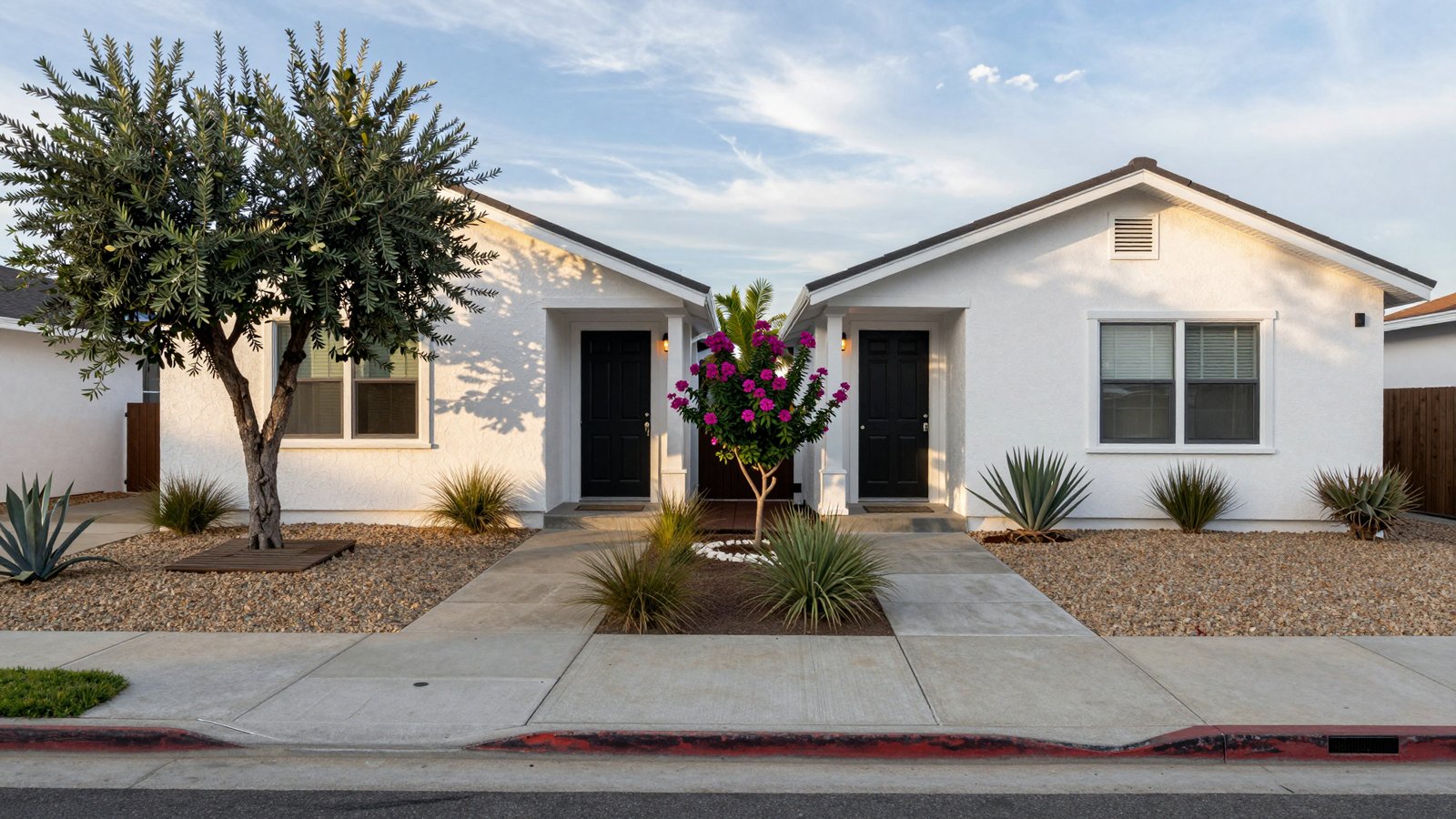
SB 9 Explained: How California's Duplex Law Opens the Door to More ADUs
Senate Bill 9 allows most single-family homeowners in California to split their lot or add a duplex — but the interaction with ADU law creates opportunities few people know about.
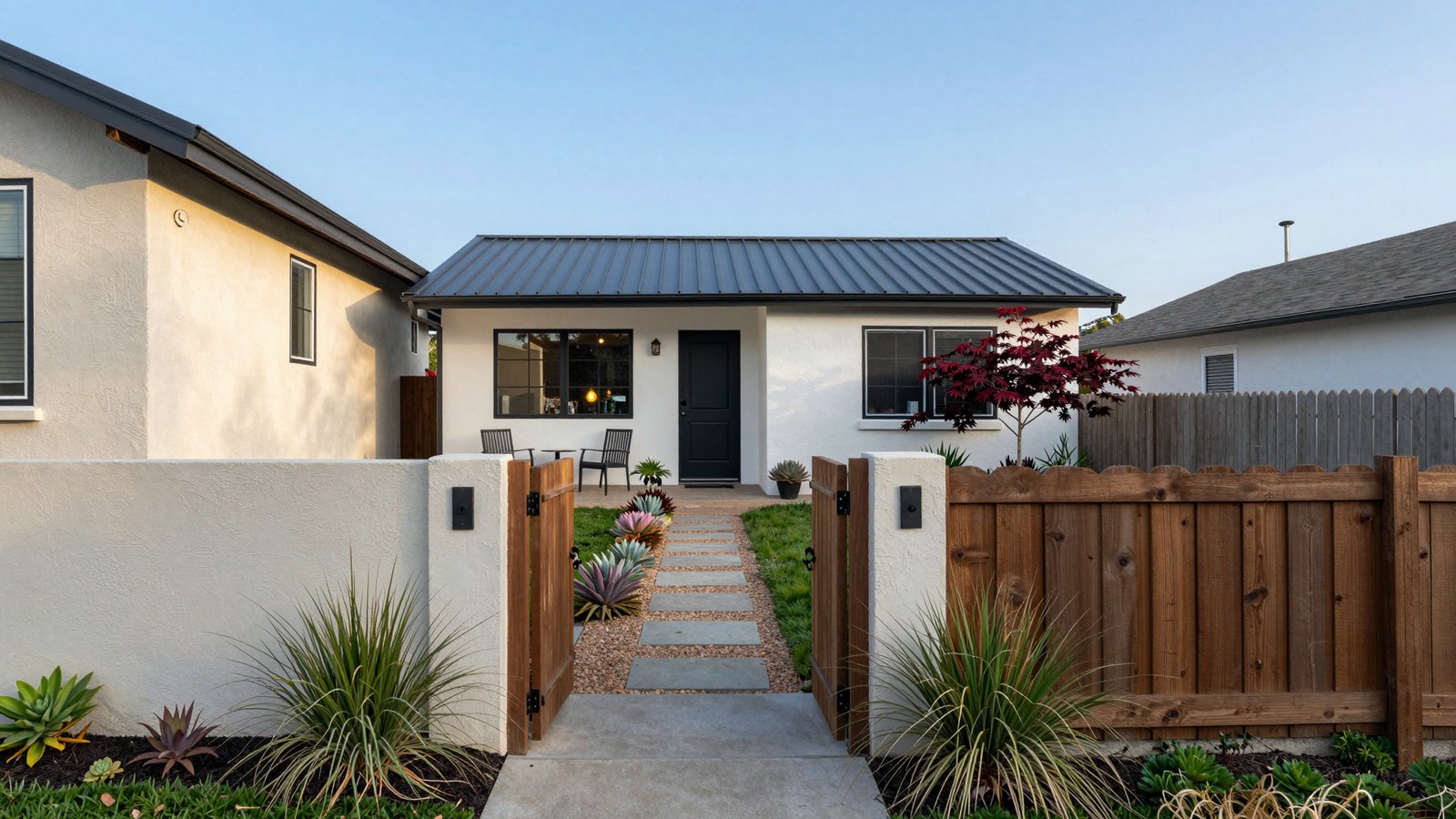
ADU Condoization in California: Can You Sell Your ADU Separately?
AB 1033 allows cities to permit the separate sale of ADUs as condominiums. Here's what it means, which cities have opted in, and how it changes the math for ADU investors.
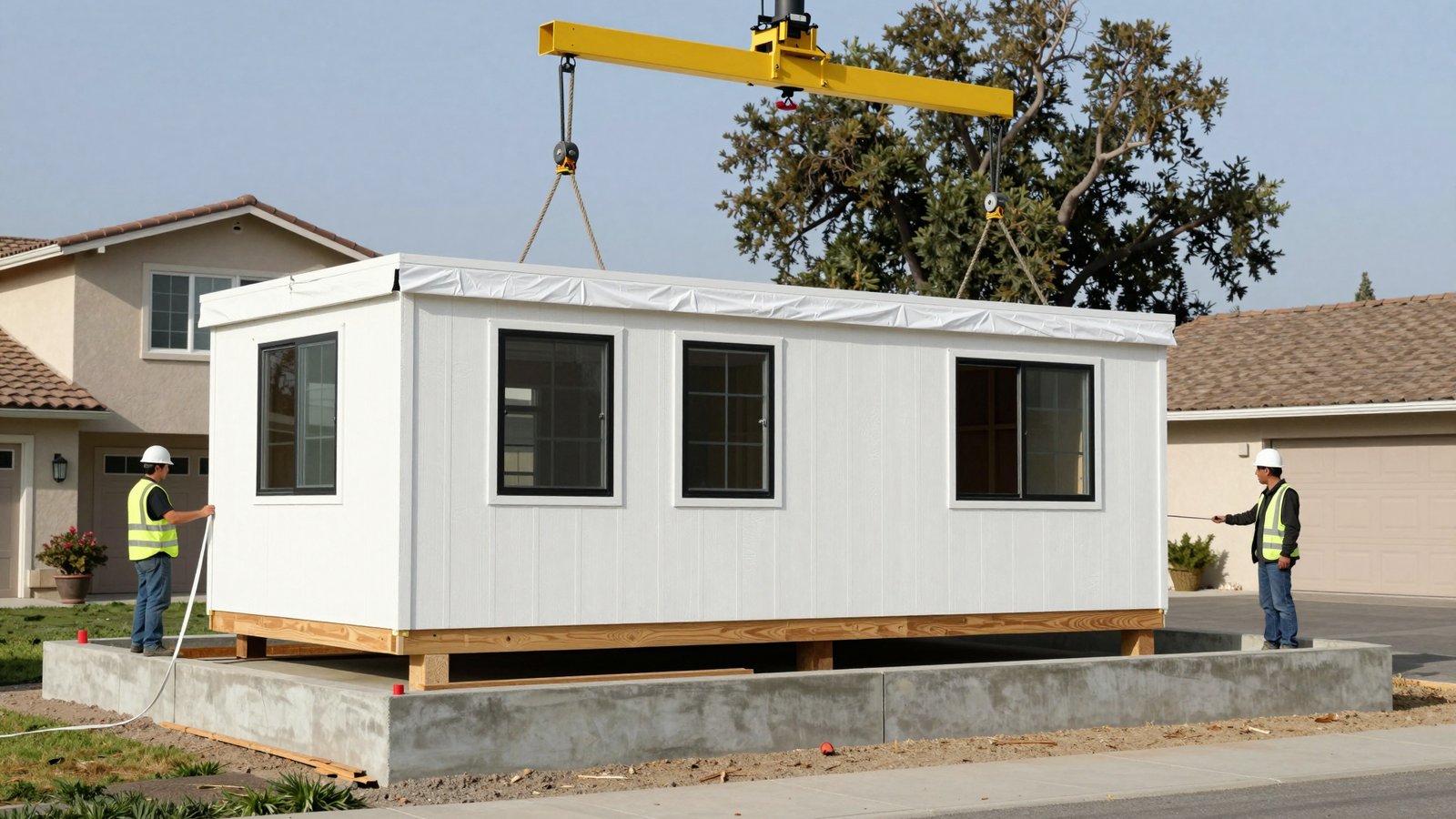
Manufactured vs. Modular ADUs in California: What's the Difference?
The terms "manufactured," "modular," and "prefab" are used interchangeably but they mean very different things — especially under California law. Getting this right affects your permits, financing, and timeline.