How Long an ADU Takes in California, Phase by Phase
A California ADU takes 6–18 months from first call to move-in, and permits drive most of that spread. Here is each phase in order, the state deadlines inside the permit phase, where projects lose time, and what an owner can speed up.
The Short Answer: 6–18 Months
An ADU in California takes 6–18 months on our process, measured from your first call to move-in. One phase explains most of that spread: permits. Permit processing takes 3–9 months depending on the city, and it is the longest and least predictable part of the project. After the permit is approved, the rest follows a set sequence: a 12–16 week factory build that runs alongside site prep, a single set day, about 4–6 weeks of utility connections and finishes, and about 2–4 weeks of final inspections.
This guide takes each phase in order: what happens, who controls the clock, where projects lose time, and which parts an owner can actually speed up. The phase lengths come from our customer journey. The state deadlines and utility data come from the sources listed at the end.
The Timeline at a Glance
- First call, visit and proposal: We talk through your property and goals, you see the homes in person, and a proposal follows. You set most of the pace here.
- Contract, design sessions and permit package: Finishes and details are settled after the contract, and the permit package goes to your city or county.
- Permits: 3–9 months, depending on the city.
- Factory build and site prep: 12–16 weeks after permit approval, running at the same time.
- Set day: One day.
- Utility connections and finishes: About 4–6 weeks.
- Final inspections and certificate of occupancy: About 2–4 weeks.
Phase 1: First Call, Visit and Feasibility
Every project starts with a call about your property and what the ADU has to do: house a parent, earn rent, or add value to the lot. Next comes a free visit to see the homes and options in person. After the visit, a $500 good-faith deposit pays for our visit to your property and a detailed proposal. We credit it toward the contract, and we refund it if you decide not to move forward after you receive the proposal.
The property review is where a timeline becomes realistic. It checks setbacks, lot dimensions, utility access points and site conditions, and it flags the items that add time as well as cost: a long utility run, a slope that needs grading or a retaining wall, a tree your city requires a permit to remove, a garage to demolish, or a delivery route that needs a crane. Our guide to what a starting price covers lists those site items in detail.
Use this phase to settle the decisions that are hardest to change later: which of our floor plans, where it sits on the lot, and how big it is. Size affects the calendar as well as the budget. School districts may charge fees on an ADU over 500 square feet of interior livable space, and under Education Code section 17620 a city cannot issue a building permit until the school district certifies that its fees are paid or do not apply. Impact fees start above 750 square feet; our guide to the 750-square-foot line covers them.
Phase 2: Contract, Design Sessions and the Permit Package
After you sign the contract, design sessions with our team finalize finishes and details. At the same time, we prepare the permit package: site, floor, foundation, utility and structural plans, plus the permit research and processing. Permit fees are not included; your city, the school district and the water and sewer agencies charge them separately.
The package decides how the permit phase goes. A complete, consistent submittal goes into review. An incomplete one comes back with a list of missing items and waits for a second submittal. Changes that touch the plans, such as moving a window or a wall, cost the least time now, before the city has reviewed anything.
Phase 3: Permits, 3–9 Months
Permit processing takes 3–9 months depending on the city. State law sets deadlines inside that window:
- 15 business days to decide if the application is complete: The permitting agency must decide whether an ADU application is complete and tell you in writing within 15 business days of receiving it. An incomplete notice must list the missing items and explain how to fix them. If the agency misses the deadline, the application is deemed complete.
- 60 days to approve or deny: On a lot with an existing home, the agency must approve or deny a complete ADU application within 60 days. If it does neither, the application is deemed approved. A denial must come with a full set of written comments that lists what is deficient and how to fix it. Our article on the 60-day shot clock covers the rule in depth.
- 30 days for preapproved plans: Cities and counties had to set up a program for preapproved ADU plans by January 1, 2025. A detached ADU that uses a preapproved plan, or a plan identical to one in a previously approved detached ADU application, must get a decision within 30 days.
- The coastal zone: Where an ADU needs a coastal development permit, the local government or the Coastal Commission must approve or deny that permit within 60 days of a completed application.
Those deadlines stop a city from sitting on a complete application. They do not make permits take 60 days. The clock starts only when the application is complete, and it pauses for any delay you ask for. Each round of corrections means revised plans and another review. The building permit also waits for the school district's certification, and the review can involve the planning, building and fire departments and the utilities. One rule does save time: when a detached garage is being replaced with an ADU, the city must review and issue the demolition permit at the same time as the ADU permit.
Some cities move faster than the deadlines require. Modesto's ADU Express program books a one-hour appointment where city staff review ADU plans with the owner and their architect or engineer, identify corrections on the spot and, for projects that meet state and local ministerial standards, can approve plans the same day. Same-day approval requires plans prepared by a professional designer, licensed architect or licensed engineer, and taking part does not guarantee approval.
We handle the permit work for you: research, the package, submittal, corrections and coordination with each agency. Permit fees are not included. For costs in Santa Clara County and nearby cities, see our San Jose and Bay Area ADU cost guide.
Phase 4: Factory Build and Site Prep, 12–16 Weeks
The factory build starts once the permit is approved and takes 12–16 weeks in a climate-controlled plant. Waiting for approval protects you: the home is built to the plans the city approved, not to a draft that could still change in plan check.
Site prep runs at the same time. Our team pours the foundation and completes the utility rough-ins for water, sewer and electrical, with up to 50 feet of trenching in the standard scope. The two tracks are timed to finish together, so the home does not wait for a foundation and the foundation does not wait for a home. Our guide to permanent foundations for manufactured ADUs explains how the foundation is permitted and what the inspector checks.
Phase 5: Set Day
The finished home arrives in sections, and we set it on the foundation in a single day. Access decides how that day runs. Where the route is clear, the sections move into place on the ground. Where it is not, a crane lifts them over the house, which needs room to set up and, in some cities, a permit to occupy the street. The feasibility review identifies these needs early, so set day follows a plan instead of a surprise.
Phase 6: Utility Connections and Finishes, About 4–6 Weeks
After the set, we connect and test water, sewer, electrical and, where the home has it, gas. Our team joins the sections, builds the entry stairs and landing, and completes the exterior finishing and remaining interior work. This takes about 4–6 weeks. If your electric panel cannot carry the ADU, the panel upgrade is extra, and the feasibility study prices it.
This is also where a utility can hold up a finished home. If the ADU needs new or upgraded service from the electric utility, that work runs on the utility's schedule, not the city's or ours. In 2024 the California Public Utilities Commission set target times for PG&E, SCE and SDG&E: for a Rule 16 service line extension, an average of 182 calendar days and a maximum of 335, counted from when the utility approves the customer's request. PG&E's data for completed jobs applied for between January 31, 2023 and December 31, 2024 showed an average end-to-end cycle of about 307 calendar days for Rule 16 work, and about 61 calendar days for the utility side of main panel upgrades. Not every ADU needs utility work. HCD also notes that a new detached ADU can be required to have its own connection from the water or sewer provider. Ask both questions at the feasibility stage, and apply as soon as the plans show the load.
Phase 7: Final Inspections and Certificate of Occupancy, About 2–4 Weeks
The city or county performs its final inspection. We coordinate inspector access and address any comments, and the building department issues the certificate of occupancy. State law requires that certificate before anyone lives in the ADU. For a manufactured ADU on a foundation, the enforcement agency that issued the certificate, usually the city or county building department, also records HCD form 433A with the county recorder within five business days of issuing the certificate. This phase takes about 2–4 weeks, and then the ADU is ready to occupy or rent. If you plan to rent it, our guide to renting an ADU or JADU covers the rules.
Where Projects Lose Time
- Incomplete submittals: Each missing item means a written notice and another submittal before the 60-day clock starts.
- Correction rounds: Each round of plan check comments needs revised plans and another review. Slow or partial answers add rounds.
- Agencies outside the building department: The school district, the water and sewer providers, the fire department and, near the coast, the coastal permit each keep their own calendar.
- Electric service: New or upgraded service from the utility can take months, as the CPUC figures above show.
- Late changes: Changing the plan, its size or its position after submittal can mean revised plans and another review. A size change can also move school and impact fees.
- Site conditions found late: A protected tree, a slope, a long utility run or a blocked delivery route costs the least time when the feasibility review finds it.
What an Owner Can Speed Up
No owner can shorten a city's review queue or the 12–16 week factory build. You can keep your own steps off the critical path:
- Decide early: Choose the plan, size and position before the permit package goes in, and keep design session decisions on schedule.
- Answer fast: Return signatures, owner forms and answers to the city in days, not weeks. A correction round cannot start until the city has your response.
- Be ready for fees: The building permit waits for the school district's certification, so have funds ready for district and agency fees when the city says the permit is ready to issue.
- Start on utilities early: Bring recent electric bills and your panel's rating to the first visit, and ask your water and sewer provider whether the ADU needs its own connection.
- Ask about fast routes: Ask your building department whether it has a preapproved plan program or an express review like Modesto's, and whether your project qualifies.
- Clear the path: Apply early for any tree permit your city requires, empty a garage or shed that is coming down, and keep the delivery route clear for set day.
- Line up financing: If a lender is involved, confirm its appraisal and payment schedule before the permit issues, so funding is ready when the factory build starts.
Want a timeline for your lot and city? Talk to our team. We call back, schedule your visit to see the homes in person, and walk through each phase for your property.
Sources
- California Government Code § 66317 (completeness review, 60-day approval, denial comments, tolling)
- California Government Code § 66314 (demolition permit for a detached garage replaced with an ADU)
- California Government Code § 65852.27 (preapproved ADU plans, 30-day decision)
- California Government Code § 66328 (certificate of occupancy)
- California Government Code § 66329 (coastal development permits for ADUs)
- California Education Code § 17620 (school fees; district certification before a building permit)
- California Department of Housing and Community Development, Accessory Dwelling Unit Handbook (March 2026)
- HCD form 433A, Notice of Manufactured Home, Mobilehome, or Commercial Modular Installation on a Foundation System, and instructions (Rev. 07/26)
- California Public Utilities Commission, Energization Timelines Workshop (June 30, 2025) (Decision 24-09-020 targets and PG&E energization data)
- City of Modesto, Accessory Dwelling Units (ADU Express Program)
This article is general information, not legal or financial advice. Permit review times, utility schedules and code requirements vary by city, county, district and utility, and they change often; confirm them with your local agencies. The nanohouz phase lengths are estimates and depend on your city and site. Current as of November 23, 2026.
Keep reading
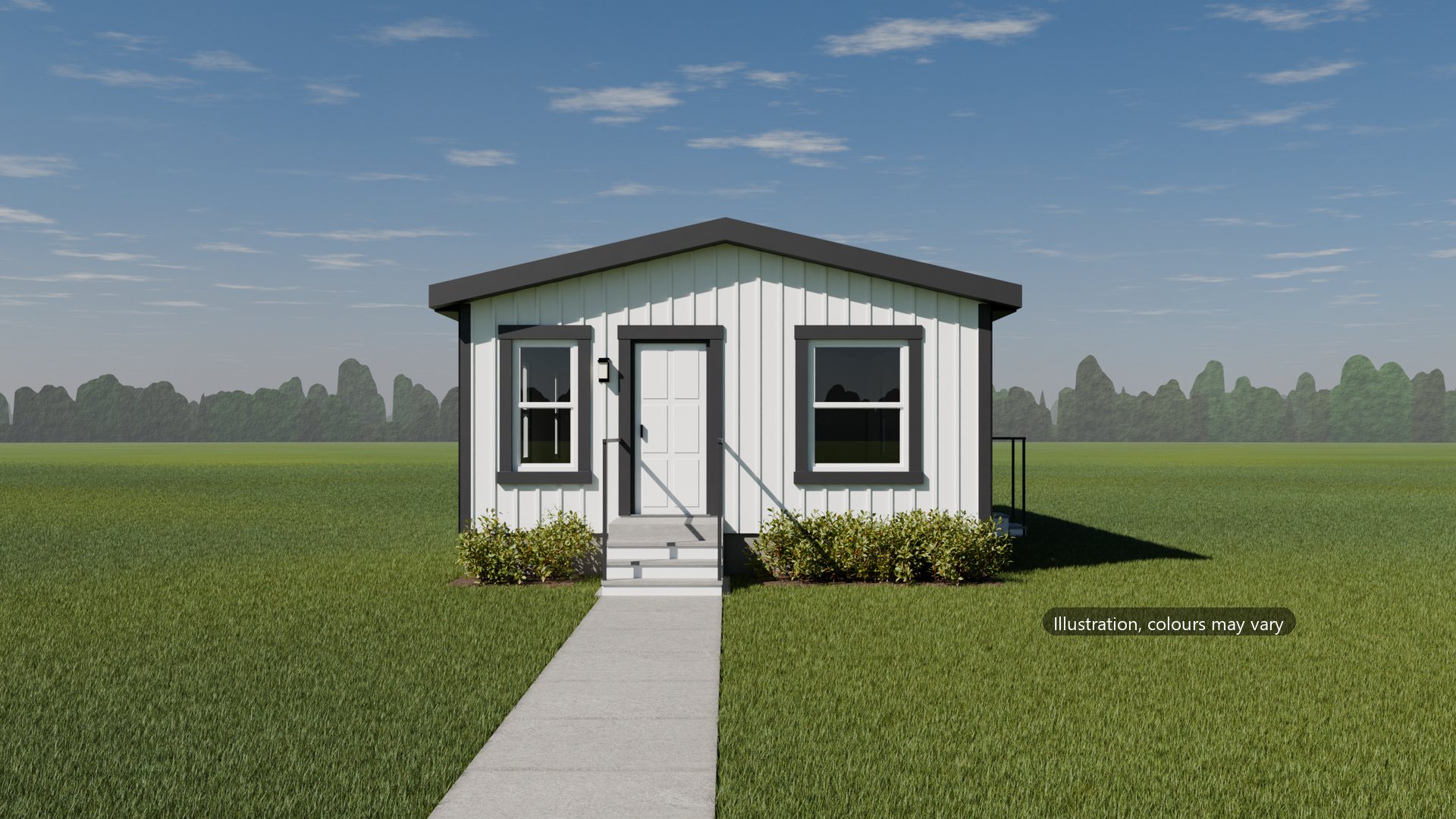
Manufactured ADUs on a Permanent Foundation in California: Permits, Foundations and Inspections
A HUD-code manufactured home counts as an ADU under California law. Here is who approves what, how the home is set on a permanent foundation, what the inspector checks, and how form 433A makes it part of your real property.
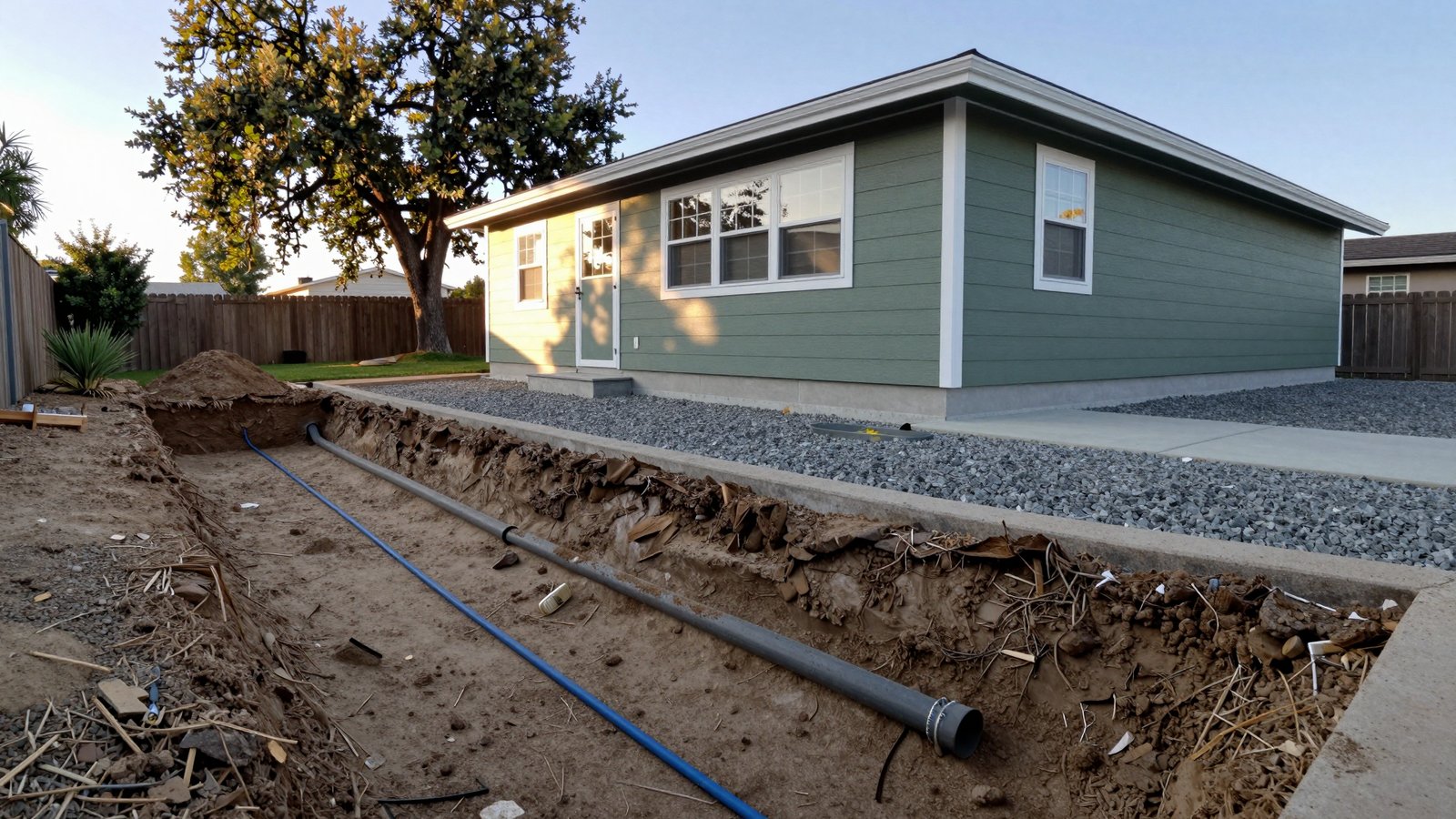
Manufactured ADU Costs in California: What the Starting Price Covers
Every nanohouz floor plan now shows a starting price. Here's what it covers, what our turnkey scope includes, and the lot-specific fees, site work and utility costs that move a California ADU's final number.
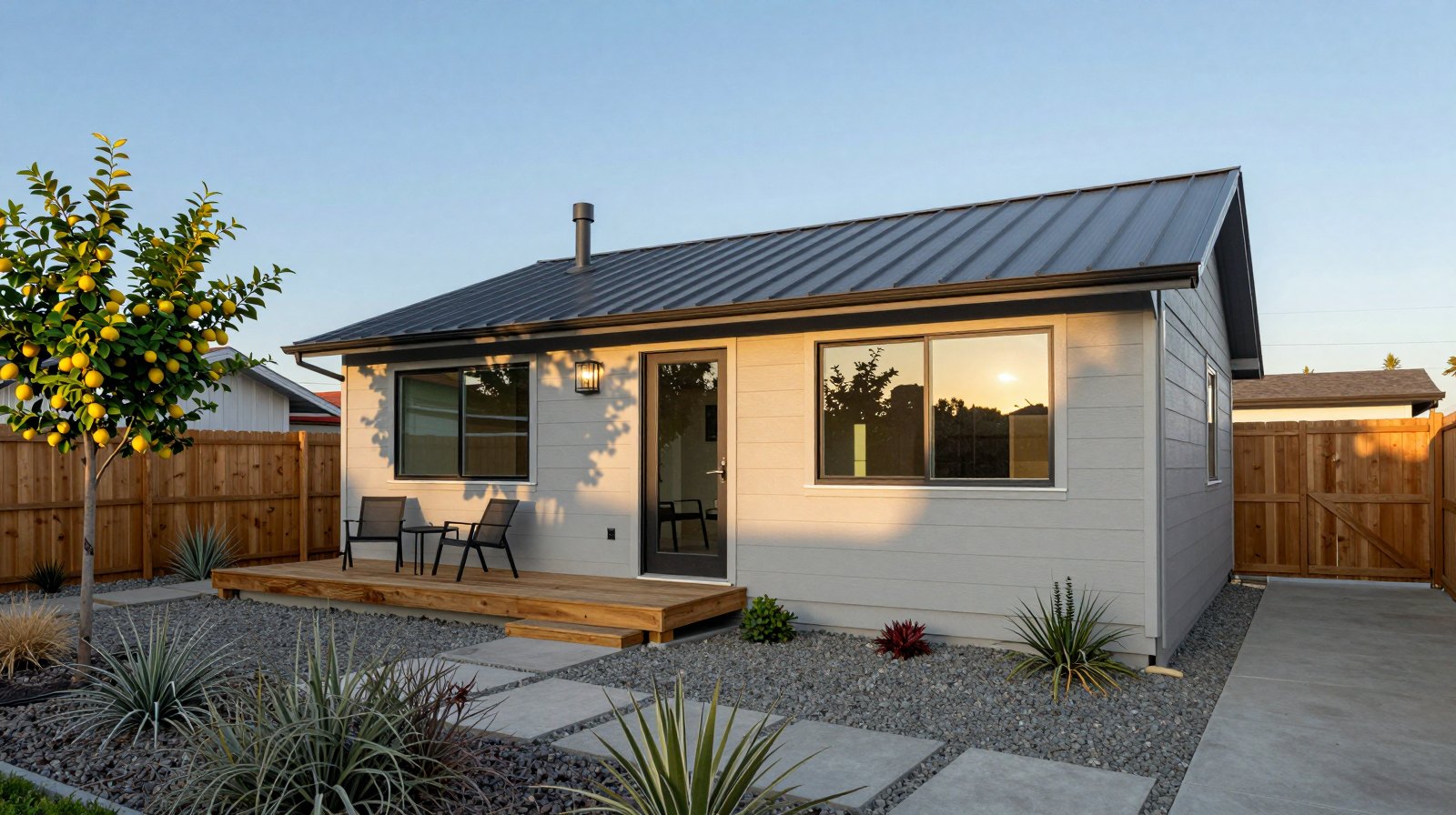
What an ADU Costs in San Jose and the Bay Area in 2026, and Whether One Fits on Your Lot
Turnkey ADU prices by size as of November 2026, what the price includes and what adds to it, the state rules that decide whether an ADU fits on a Bay Area lot, and what changes on January 1, 2027.