Manufactured ADUs on a Permanent Foundation in California: Permits, Foundations and Inspections
A HUD-code manufactured home counts as an ADU under California law. Here is who approves what, how the home is set on a permanent foundation, what the inspector checks, and how form 433A makes it part of your real property.
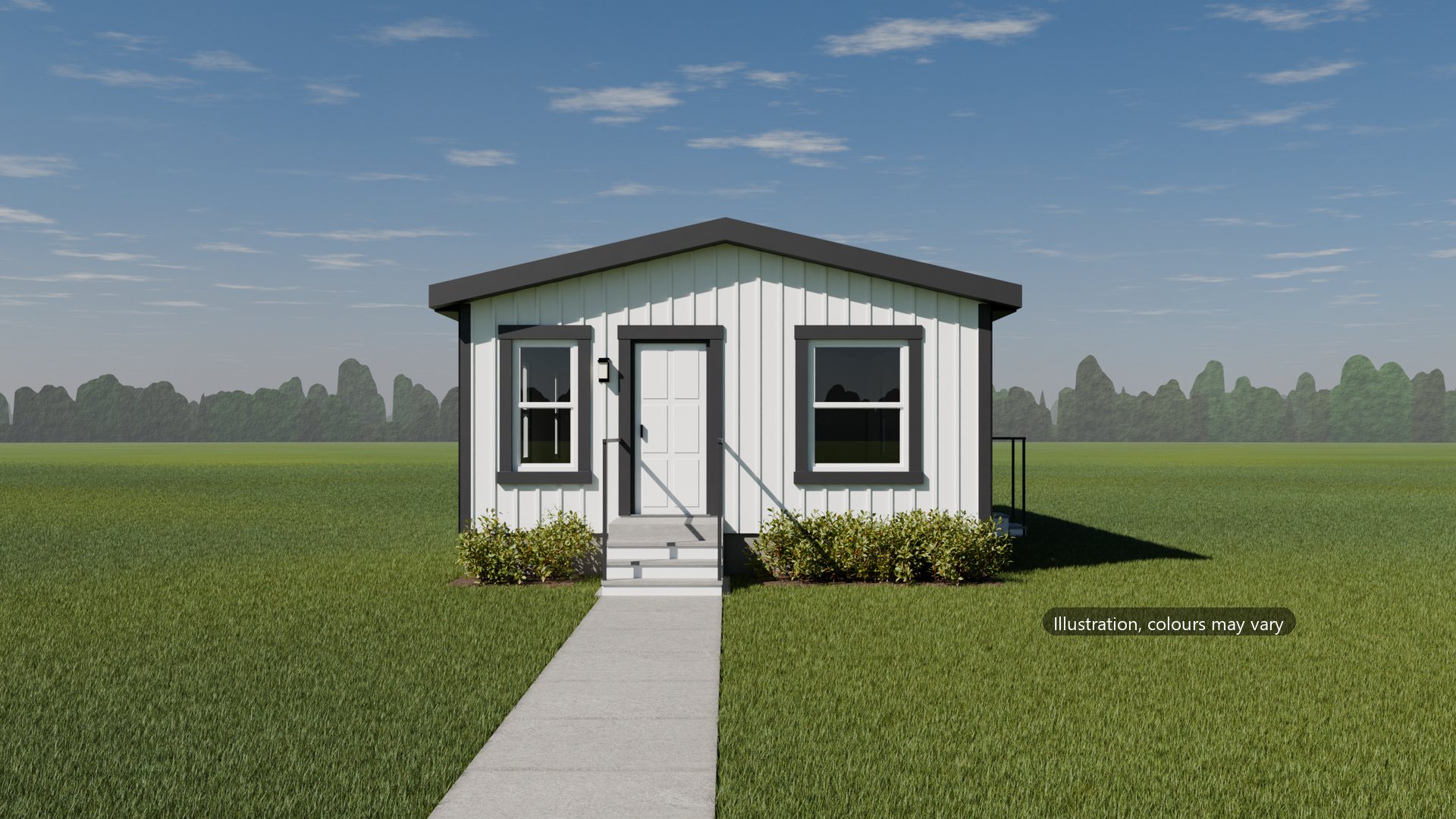
A Manufactured Home Can Be Your ADU
California's ADU law does not care whether your ADU is framed in the backyard or built in a factory. Government Code section 66313 defines an accessory dwelling unit to include a manufactured home as defined in Health and Safety Code section 18007, and HCD's ADU Handbook answers the question in one word. Can a manufactured home be used as an ADU? Yes.
Section 18007 sets the test. A manufactured home was built on or after June 15, 1976, travels in one or more sections, is at least 8 body feet wide or 40 body feet long in traveling mode or at least 320 square feet once erected, is built on a permanent chassis, and is designed as a dwelling with or without a foundation once connected to utilities. A home that misses the size test still qualifies if its manufacturer certifies it to the federal standards.
Because it is an ADU, the state ADU rules apply to it like any other: the size limits, the setbacks, and the 60-day deadline for your city to approve or deny a complete application, covered in our article on the ADU permit shot clock. What differs is how the home is built, inspected and attached to the land. One limit first: HCD's handbook says ADUs are not permitted on lots inside mobilehome parks, where a lot allows only one manufactured home, mobilehome or recreational vehicle.
Three Agencies, Three Jobs
A common misunderstanding is that the state permits a manufactured ADU instead of the city. On a private lot, it does not. Each level of government owns a different piece of the project.
- The federal government: the home itself. The home is built to the HUD Code. An independent inspection agency works in the plant under 24 CFR 3282.362, and its core duty is to see that every home is inspected at some stage of production. It supplies the certification labels and may not let a label go on a home it finds out of conformance. Each transportable section carries its own label under 24 CFR 3280.11. Federal law, 42 U.S.C. section 5403(d), bars any state or city from holding the home to a different construction or safety standard, while leaving each state the authority to set standards for the support systems and foundations homes are installed on.
- The state (HCD): foundation rules and the title. Health and Safety Code section 18551 directs HCD to write foundation-system regulations that apply statewide and supersede any city or county ordinance on the subject, and lets HCD approve alternate foundation systems. HCD also runs the registration and titling of manufactured homes, which ends when a home becomes real property.
- Your city or county: the site and the installation. HCD's flowchart for foundation installations assigns the building permit, the inspections and the certificate of occupancy to the local enforcement agency. Outside mobilehome parks, that is normally your city or county building department. Stanislaus County's manufactured home guide describes its building division's role the same way: issue the permit and inspect the installation everywhere in the unincorporated county except manufactured home parks.
For a homeowner, that means one place to apply: your city or county. The federal and state pieces arrive as documents in your permit file: the HUD labels, the manufacturer's installation instructions, and a foundation design that meets HCD's rules.
Two Ways to Put a Home on a Foundation
Section 18551 allows a manufactured home on a foundation system in two legal forms. The difference matters more than the concrete.
- As real property, under subdivision (a). The home becomes a fixture and an improvement to the land. Its HCD registration is cancelled, and the county taxes it with the land. Stanislaus County's guide says a home on a permanent foundation is taxed in the same fashion as a conventional home.
- As personal property, under subdivision (b). The home sits on a foundation system but keeps its HCD title and registration. The same guide notes that a home kept as personal property pays annual fees to HCD to maintain its registration, and that an owner pays either those fees or county property tax, not both.
This article follows the real property route.
What Counts as a Foundation System
HCD's foundation rules sit in Title 25, section 1333 of the California Code of Regulations. A foundation system and its connections must resist dead, live, wind and seismic loads and suit the local soil. The load-bearing parts are sized and placed according to the manufacturer's installation instructions, which become part of the foundation plans. Where no instructions are available, plans signed by an architect or engineer take their place. In flood hazard areas, the foundation must also resist flood loads, and the home must be anchored against flotation, collapse and lateral movement.
HCD can approve foundation systems as standard designs. Under section 1333, every enforcement agency must accept an HCD-approved system for a permit when the system's design loads and conditions match the location. A city cannot substitute its own foundation rule, because section 18551 makes HCD's regulations supersede local ordinances on manufactured home foundations.
The steel chassis the home was built on stays with it; the foundation carries the home at the support points its installation instructions specify. In our turnkey scope, foundation work covers clearing, excavation, stem wall foundation footings and piers. Your soil, your slope and any flood zone decide the final design, and a soils report, where your building department asks for one, feeds into it.
The Permit File
Section 18551(a)(1) lists what the home's owner or a licensed contractor must give the enforcement agency to get a permit for a foundation installation:
- Proof you control the land: written evidence that the home's owner owns, holds title to or is buying the lot, or holds a transferable lease of 35 years or more for its exclusive use.
- Proof the home is free of liens: or written consent from any legal owner or lienholder to attaching the home to the land.
- Foundation plans: as HCD's regulations require, or an HCD-approved alternate.
- Installation instructions: the manufacturer's, or plans signed by a California-licensed architect or engineer.
- Fees: the local building permit fees, plus $11 per transportable section payable to HCD.
When it issues the permit, the building department also starts form HCD 433A, the Notice of Manufactured Home, Mobilehome, or Commercial Modular Installation on a Foundation System, with the information available at that point. The manufacturer's name, serial numbers, manufacture date and HUD label numbers are filled in after installation, before the certificate of occupancy. When a licensed dealer sells the home, HCD's flowchart has the dealer report the sale to HCD within 10 days of the date of sale.
The rest of the application looks like any other ADU: site, floor, foundation, utility and structural plans. nanohouz holds HCD manufactured-housing dealer license DL1639848, and our turnkey scope covers these plans plus permit research, facilitation and processing. Permit fees are not included: your city and the other agencies charge them separately.
What the Inspections Look Like
The home was inspected in the plant under the HUD Code, so local inspections center on your lot. Each city sets its own list, in roughly this order.
- Foundation: The inspector checks the foundation against the approved plans. Stanislaus County's list of requirements for a permanent foundation includes a foundation of the type HCD's standards call for and a building inspector who inspects and approves it.
- Set day: The finished sections are delivered and set on the foundation in a single day. A two-section home is joined on site.
- Installation: Supports, anchoring and the connections between sections are checked against the manufacturer's installation instructions, which are part of the approved plans.
- Utilities and site work: Water, sewer and electrical connections, plus the entry stairs and landing.
- Final inspection and certificate of occupancy: Before the certificate of occupancy (form HCD 513C) can be issued, the 433A has to be complete, and any existing HCD or DMV title, registration, plates or decals have to be surrendered to the building department. HCD's instructions also warn owners not to remove the HUD labels that certify the home.
On our customer journey, permit processing typically takes 3–9 months depending on your jurisdiction, and the factory build takes 12–16 weeks after permit approval, running at the same time as foundation and utility work on site. Utility connections and final finishes take about 4–6 weeks after delivery, and final inspections and the certificate of occupancy about 2–4 weeks after that. The full process runs 6–18 months from first call to move-in.
The 433A: When the Home Becomes Real Property
Within five business days of issuing the certificate of occupancy, the enforcement agency records the 433A with the county recorder. The recorder indexes it to the property owner, and from then on it gives notice of its contents to anyone who deals with the property, such as a buyer, a lender or a title company. The agency then sends HCD the recorded 433A, a copy of the certificate of occupancy, the $11-per-section fee and any surrendered title documents. HCD cancels its title record and changes the status to "Permanent Foundation 18551."
Under section 18551, permanent attachment takes legal effect on the day the certificate of occupancy is issued and the document is recorded. From then on:
- The home is part of the land. It is a fixture and a real property improvement to the lot it sits on.
- It cannot simply be moved. Removing it requires the consent of everyone who holds an interest in the land, such as a lender with a deed of trust. The owner must notify HCD and the county assessor at least 30 days before a legal removal, and once removed, the home becomes personal property again.
- The county assessor takes over. The building department gives the owner form HCD 433B, a Notice to Assessor, which the owner completes and sends to the county assessor.
- State standards still apply to the home. Section 18551 keeps an installed home subject to the state-enforced health and safety standards for manufactured homes, and Stanislaus County's guide notes that HCD permits and inspects modifications made to manufactured homes. Before a later remodel, ask both your city and HCD which approvals apply.
What Your City Can and Cannot Require
California protected manufactured homes on foundations long before today's ADU law. Government Code section 65852.3 requires cities and counties to allow federally certified manufactured homes on foundation systems on lots zoned for conventional single-family homes. The home and its lot must meet the same development standards a conventional house on that lot would, such as setbacks, yards and minimum size. Architectural rules for the home are limited to roof overhang, roofing material and siding material, and the roofing and siding rules can be no stricter than for a site-built house. A city may refuse a home if more than 10 years passed between its manufacture date and the permit application.
For an ADU, state ADU law applies as well. As HCD's handbook summarizes it, an ADU application is approved ministerially, without discretionary review or a hearing, and when the lot already has a home, the city must approve or deny a complete application within 60 days or it is deemed approved.
One rule works in the owner's favor. A newly built detached ADU generally has to include solar panels under the California Energy Code, but HCD's handbook excludes manufactured homes from that requirement, and the California Energy Commission says HUD-labeled manufactured homes follow the Title 25 regulations rather than the Energy Code. You can still add solar by choice. If you are weighing a HUD-code home against a modular one built to the California Building Code, our guide to manufactured vs. modular ADUs compares the two.
Questions to Settle Before You Choose a Plan
- Is the lot in a mobilehome park? If it is, an ADU is not allowed on it.
- Is the site in a flood hazard area? The foundation then has to be designed for flood loads, and section 1333 requires the installation instructions to say whether the design covers them.
- What are the soil and the slope? Expansive clay, shallow rock or a steep grade can turn a standard foundation into an engineered one.
- Whose name is on the deed? Section 18551 ties the home's owner to the land, and Stanislaus County lists the same ownership of land and home as a requirement. Match the names on your deed and your purchase contract early, especially if the property is held in a trust or a company.
- Are you financing it? Ask your lender before design how it wants the home recorded and what it needs from the foundation engineer.
- How large should it be? Size sets more than the price. Impact fees begin above 750 square feet, as our guide to the 750-square-foot line explains. Our floor plans run from single-section homes to two-section designs such as the Nano Nova 880.
Planning a manufactured ADU? Talk to our team. We start with a call about your property, then a visit to see the homes in person.
Sources
- California Department of Housing and Community Development, Accessory Dwelling Unit Handbook (March 2026)
- California Government Code § 66313 (ADU definition)
- California Health and Safety Code § 18007 (manufactured home definition)
- California Health and Safety Code § 18551 (foundation systems, permits, recording, removal)
- HCD Information Bulletin 2018-04, Manufactured Housing (October 24, 2018) (with the text of section 18551)
- HCD form 433A, Notice of Manufactured Home, Mobilehome, or Commercial Modular Installation on a Foundation System, and instructions (Rev. 07/26)
- HCD, Manufactured Homes Installed on a Foundation System as an Improvement to Real Property, flowchart (revised February 2014)
- California Code of Regulations, Title 25, § 1333, Foundation Systems
- California Government Code § 65852.3 (manufactured homes on single-family lots)
- 42 U.S.C. § 5403 (federal construction and safety standards; state authority over foundations)
- 24 CFR § 3280.11, Certification label
- 24 CFR § 3282.362, Production Inspection Primary Inspection Agencies
- Stanislaus County Planning and Community Development, Manufactured Homes guide
- California Energy Commission, 2025 Energy Code Accessory Dwelling Units (ADU) FAQs
This article is general information, not legal or financial advice. Permit, foundation and recording requirements vary by city and county and change over time; confirm them with your building department and HCD. Current as of November 9, 2026.
Keep reading
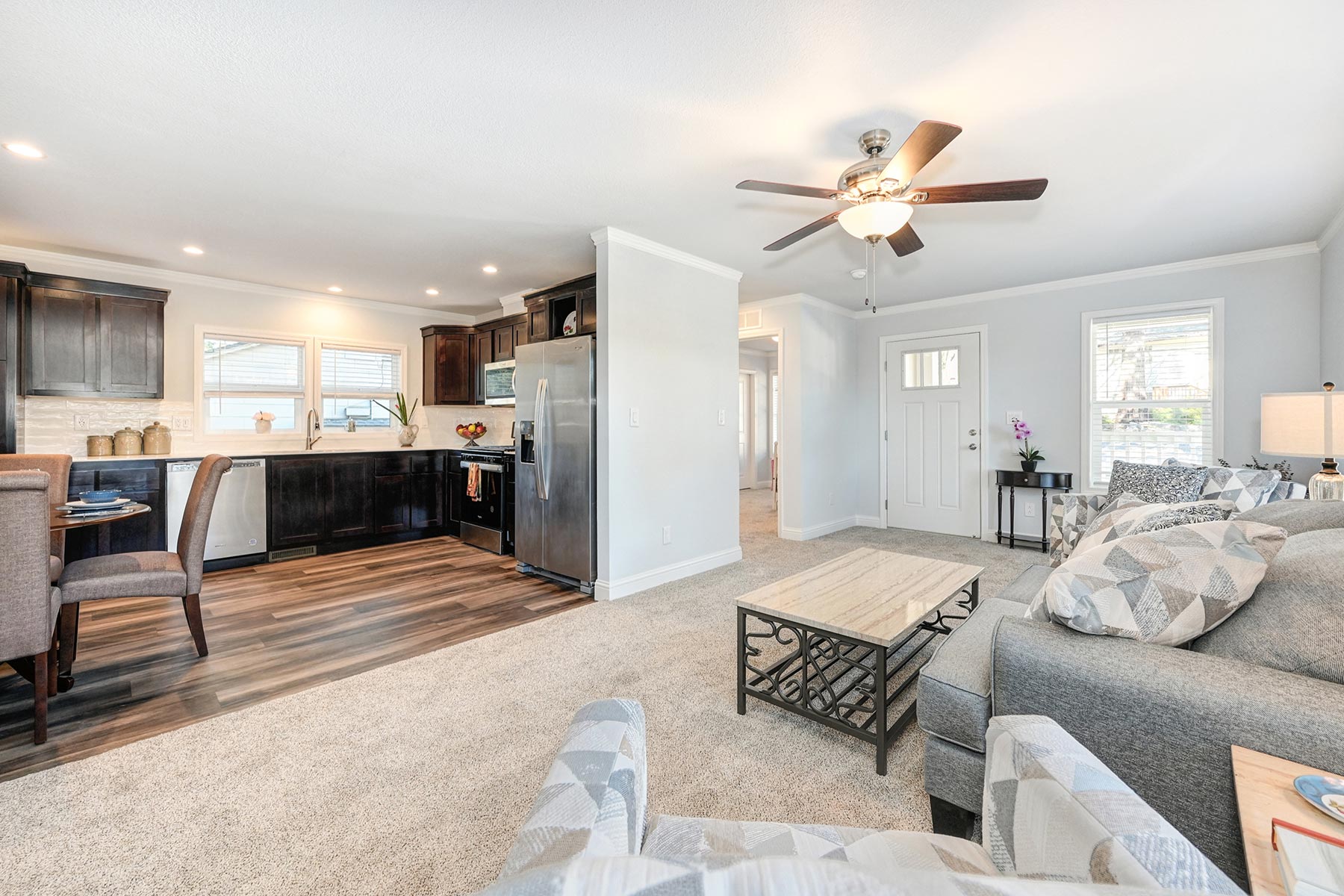
How Long an ADU Takes in California, Phase by Phase
A California ADU takes 6–18 months from first call to move-in, and permits drive most of that spread. Here is each phase in order, the state deadlines inside the permit phase, where projects lose time, and what an owner can speed up.
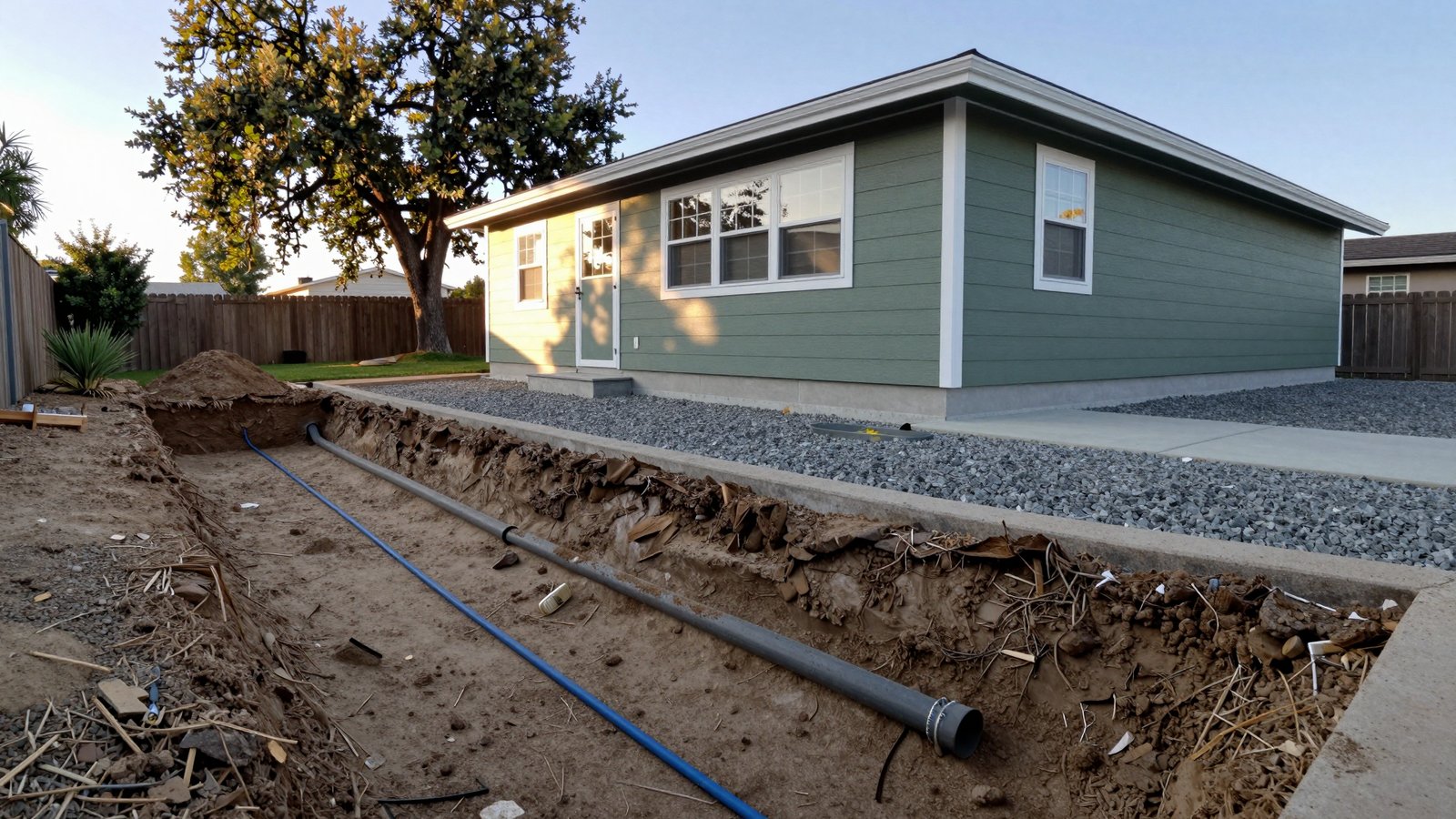
Manufactured ADU Costs in California: What the Starting Price Covers
Every nanohouz floor plan now shows a starting price. Here's what it covers, what our turnkey scope includes, and the lot-specific fees, site work and utility costs that move a California ADU's final number.
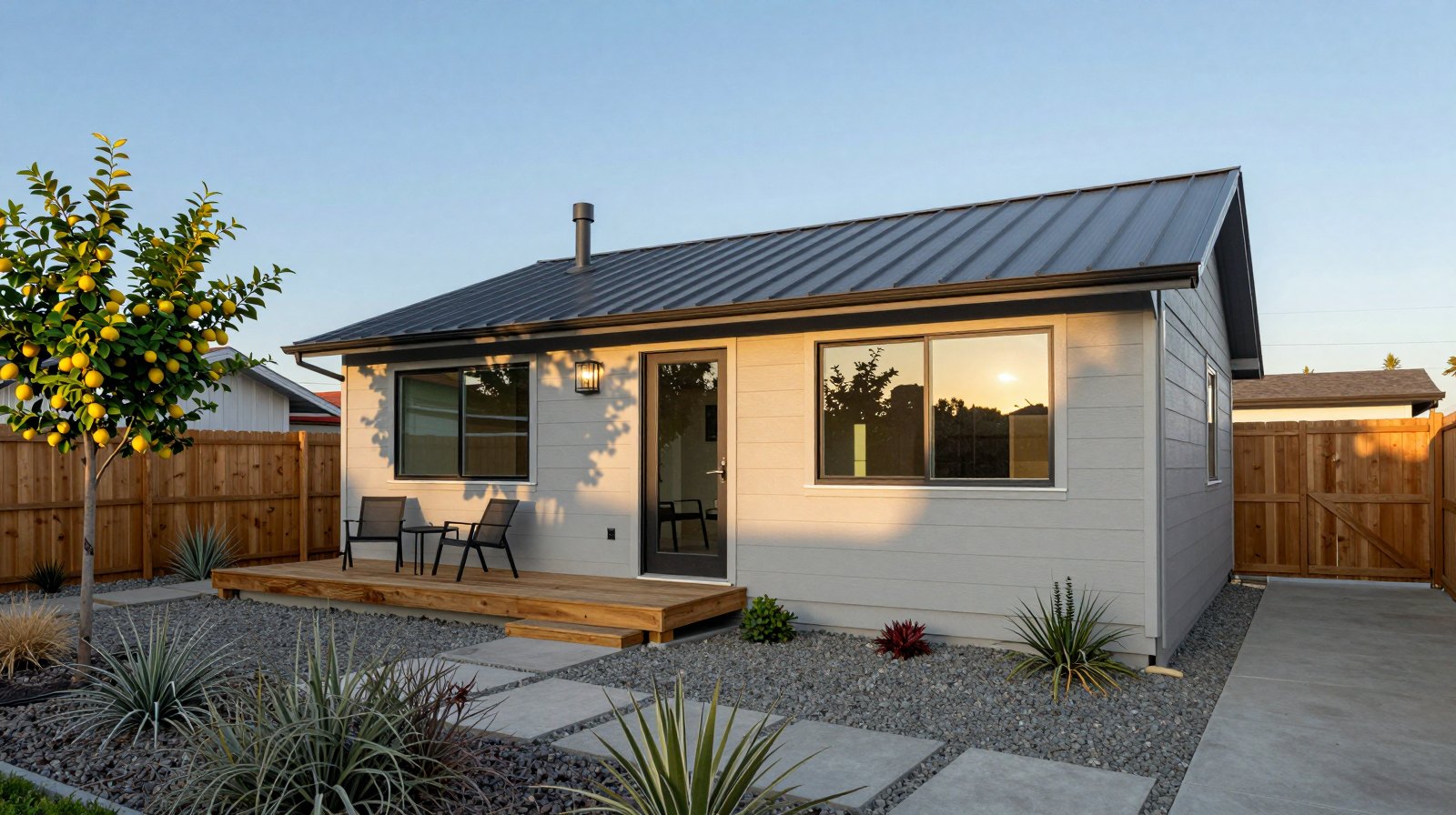
What an ADU Costs in San Jose and the Bay Area in 2026, and Whether One Fits on Your Lot
Turnkey ADU prices by size as of November 2026, what the price includes and what adds to it, the state rules that decide whether an ADU fits on a Bay Area lot, and what changes on January 1, 2027.